



👨🔬 Researchers Develop Method to Map Cinema Audience Emotions
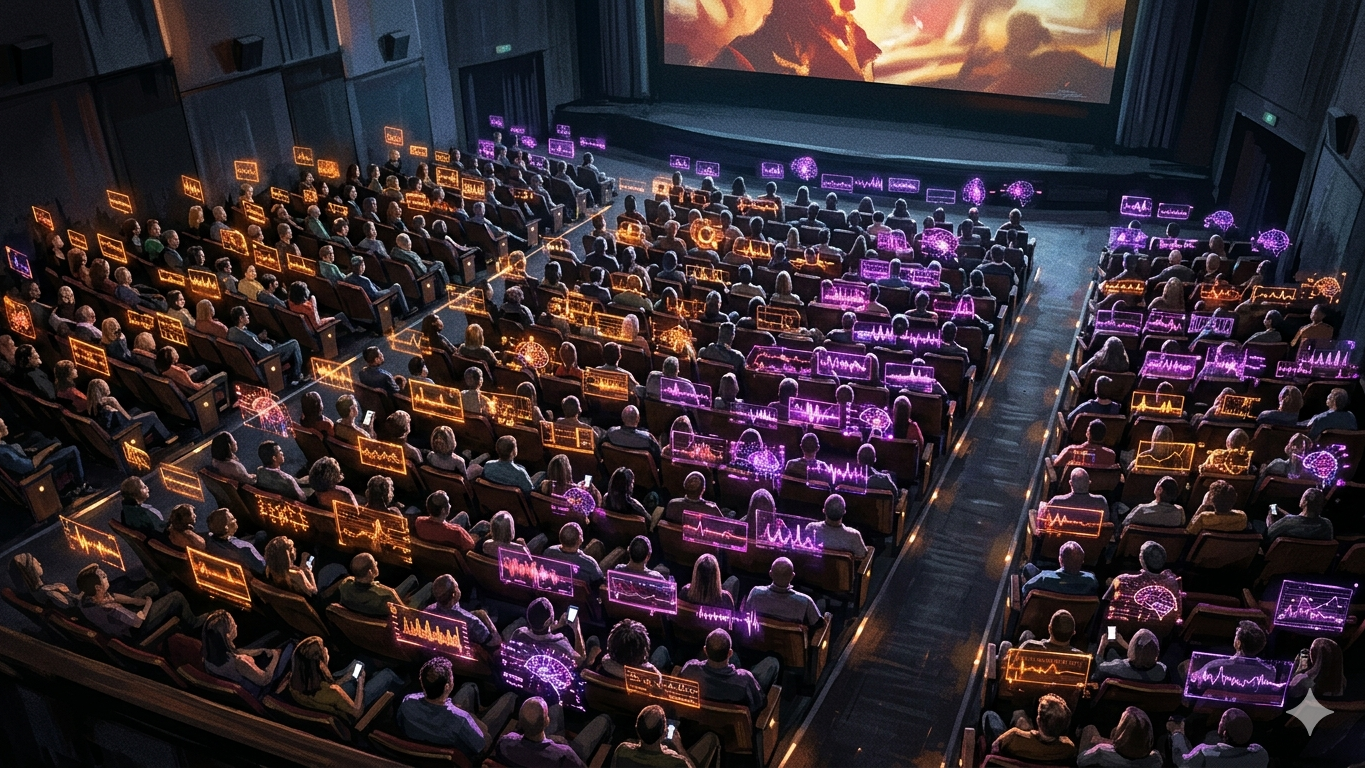
Scientists from the Universities of Bristol and Bath have conducted a groundbreaking experiment in a "Smart Cinema." Using biometric sensors, researchers captured the physical and emotional reactions of an audience to a film, aiming to understand the mechanics of how cinema influences human consciousness.
The experiment took place at the MyWorld facility on the University of Bristol campus. As test material, 200 participants were shown the short sci-fi drama RENO, directed by Rob Hifle (Lux Aeterna studio).
Science in the Director’s Chair
Throughout the screening, specialized equipment continuously monitored:
- Heart rate variability;
- Micro-movements of the body;
- Brain electrical activity (EEG).
Iain Gilchrist, Professor of Neuropsychology at the University of Bristol, noted:
“Smart Cinema provides a unique opportunity to observe how people truly experience a film. The moment-by-moment data we collect allows us to understand the scientific basis of narrative immersion. We can pinpoint how specific scenes shape the understanding of a story and identify which editing choices prove most impactful.”
The film RENO explores complex themes of trust and manipulation in the relationship between humans and technology. For director Rob Hifle, the test results served as an invaluable tool for the final cut. According to Hifle, biometrics allow creators to “hear” audience reactions where words fail, ensuring the story resonates on a primal level.
Practical Applications
The findings of this study are expected to help producers and streaming platforms make more informed decisions during the greenlighting process, while helping directors refine their tools for creating a sense of “presence.”
This experiment is a continuation of the MyWorld research series. Previously, scientists demonstrated that a live presence in a theater evokes a much stronger sense of immersion than viewing the same content via streaming services. Now, researchers intend to create a detailed “emotion map” that will revolutionize content creation in the era of new creative technologies.
Source: TVBEurope