



▶️ OTT conquers Kazakhstan
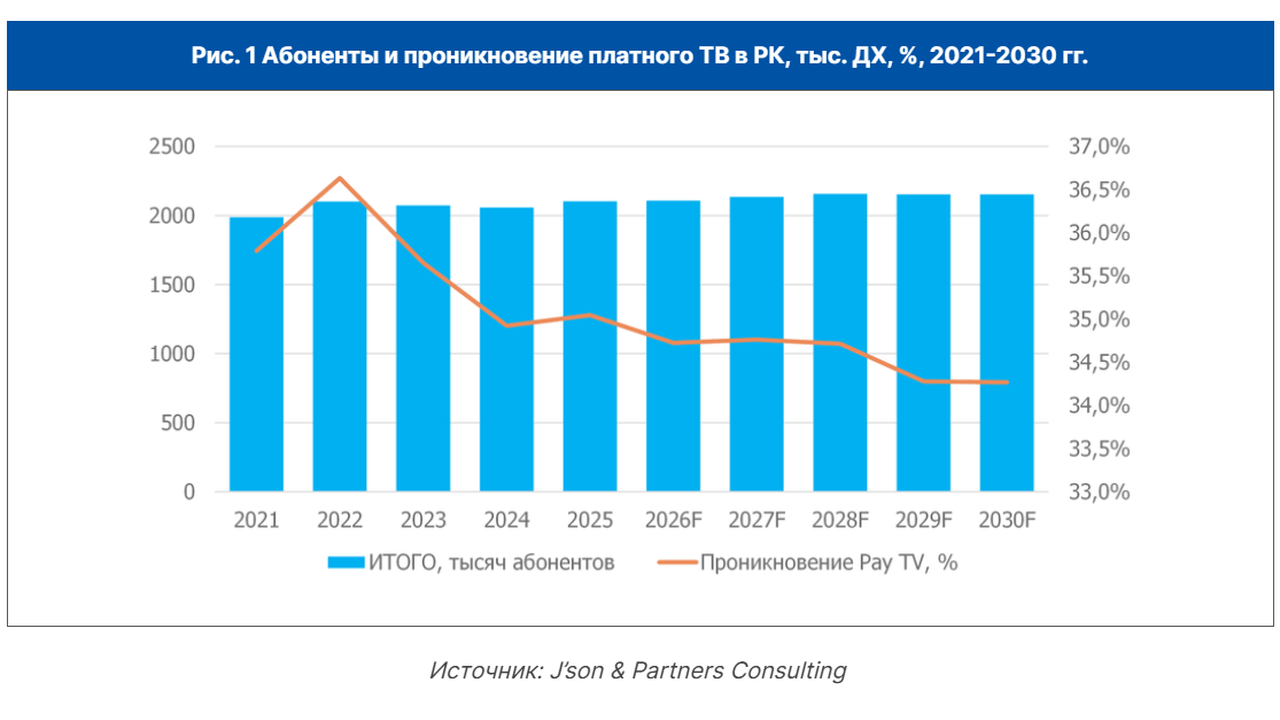
By the end of 2025, the pay-TV market in Kazakhstan demonstrated moderate growth alongside a profound technological transformation.
According to data from the analytical agency J’son & Partners Consulting, the segment’s subscriber base increased by 2.2% year-on-year, reaching 2.102 million users. The service penetration rate stabilized at 35%.
Analysts project that after 2026, subscriber numbers will plateau within the 2.1–2.2 million range, meaning that future structural changes will be driven primarily by audience migration between different signal delivery technologies.
Internet broadcasting displaces cable and IPTV
OTT technologies have emerged as the primary growth engine for the industry. In 2025, this format was chosen by 36.4% of the total pay-TV subscriber base in the republic. By 2030, the OTT market share is expected to expand to 48%, making it the absolute market leader.
“Currently, OTT technology in Kazakhstan is being driven by three major players: Kazakhtelecom, Alma+, and Beeline Kazakhstan,” notes Dmitry Kolesov, Director of the TV and Content Department at J’son & Partners Consulting.
In parallel, traditional cable TV is rapidly losing ground. While it accounted for 41.5% of subscribers in 2021, its share dropped to 31.3% in 2025 and is projected to shrink further to 24.2% by 2030. A downturn is also being recorded in the IPTV segment: its share currently stands at 26.2%, but it is expected to decline to 21.5% by the end of the decade.
A unique characteristic of the Kazakh market remains the low penetration of pay-satellite TV. This creates a sharp contrast with the Russian market, where satellite broadcasting, conversely, posted growth by the end of 2025.
Revenues rise amid tax burdens
The total revenue of the pay-TV market in Kazakhstan reached 62.4 billion tenge at the close of 2025, marking a 7% increase year-on-year. However, this growth was driven by systematic tariff hikes implemented by operators rather than an influx of new customers.
Financial pressure on subscribers has continued into the current year. Following a VAT rate increase in early 2026, providers once again adjusted their service costs upward, citing the increased tax burden. Experts anticipate that ARPU (Average Revenue Per User) will grow by an additional 11% in 2026, after which price dynamics are expected to become more moderate.
Russian and international brands split the niches
As of April 2026, there are 415 television channels broadcasting within Kazakhstan’s media landscape. Their countries of origin break down as follows:
- 216 channels – Russian;
- 133 channels – Kazakh;
- 66 channels – International (USA, UK, France, etc.).
The core of viewership continues to be comprised of General Interest channels—primarily news and entertainment. In this segment, audience demand is entirely met by local and Russian broadcasters.
When it comes to niche and thematic content, however, international players dominate the field.
“Thematic channels are predominantly represented by Russian and international television brands. Kazakh players do not develop niche networks in other categories, as audience demand is already largely satisfied by existing distributors,” concludes Dmitry Kolesov.
The sole exception to this rule is the sports segment, where local content producers maintain strong and independent positions.
Source: J’son & Partners Consulting