


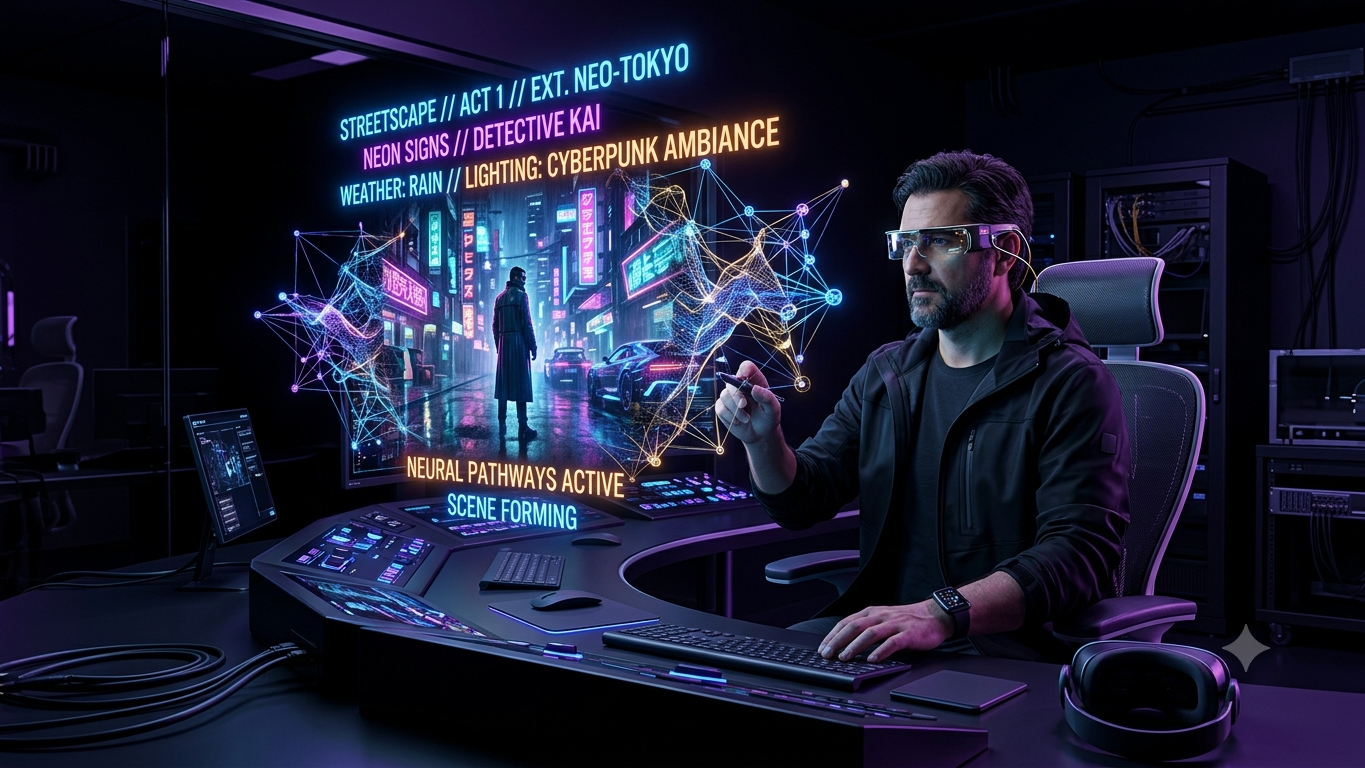

🎬 Traditional Directors Struggle to Master AI Workflows
During specialized training courses hosted by the China Television Directors Committee, a sharp new industry challenge was brought to light: attempts to delegate AI content production to traditional directors are failing on a massive scale.
For decades, filmmaking has been structurally centered around physical sets, cameras, lighting, and the management of large crews. The historical transition from film to digital merely altered the medium, leaving the underlying operational logic untouched. Generative AI, however, completely dismantles this conventional technological barrier; neural networks are capable of instantaneously rendering any frame via text prompts. Yet, now that it has become possible to visualize absolutely anything, the very core of the directorial profession has fundamentally transformed.
Traditional directors frequently falter when collaborating with neural networks because they lack the skill set required to dissect their artistic vision into precise text descriptors. In this new paradigm, the necessity to physically position lighting or scout locations is obsolete—these parameters are configured programmatically. Instead, the ability to maintain narrative and visual consistency, rigorously control artistic style, and manage overarching pacing has moved to the forefront. Within this context, the director evolves from a technical set commander into an art director and dramatist. Neural networks require a human operator who can do more than merely generate an aesthetically pleasing image; they need someone capable of enforcing rigid aesthetic and conceptual boundaries.
Yang Lei, director of China’s acclaimed television adaptation of The Three-Body Problem, provided a compelling example from his own filmography. In the iconic scene where a massive oil tanker is sliced apart by invisible nanomaterials, an AI model would highly likely yield a standardized array of spectacular clichés: explosions, tons of flying debris, panic, and bloody close-ups. Yang Lei, conversely, adopted the opposite approach—constructing the sequence using distant tracking shots, prolonged pauses, and a ringing silence, thereby generating colossal tension not by showcasing special effects, but through a deliberate refusal to display them directly. It is precisely these artistic constraints and non-obvious metaphors that generative models remain incapable of conceiving independently.
The central takeaway of the discussion was that the democratization of AI tools is dramatically lowering the industry’s barrier to entry. However, the resulting avalanche of mediocre generative content makes unique, premium directorial products even more valuable. Technology is not eradicating the profession; rather, it is rapidly filtering out those specialists who prove unable to master these emerging digital disciplines.
Sоurce: CTDC