


⚖️ Streamers Challenge New Regulations in France
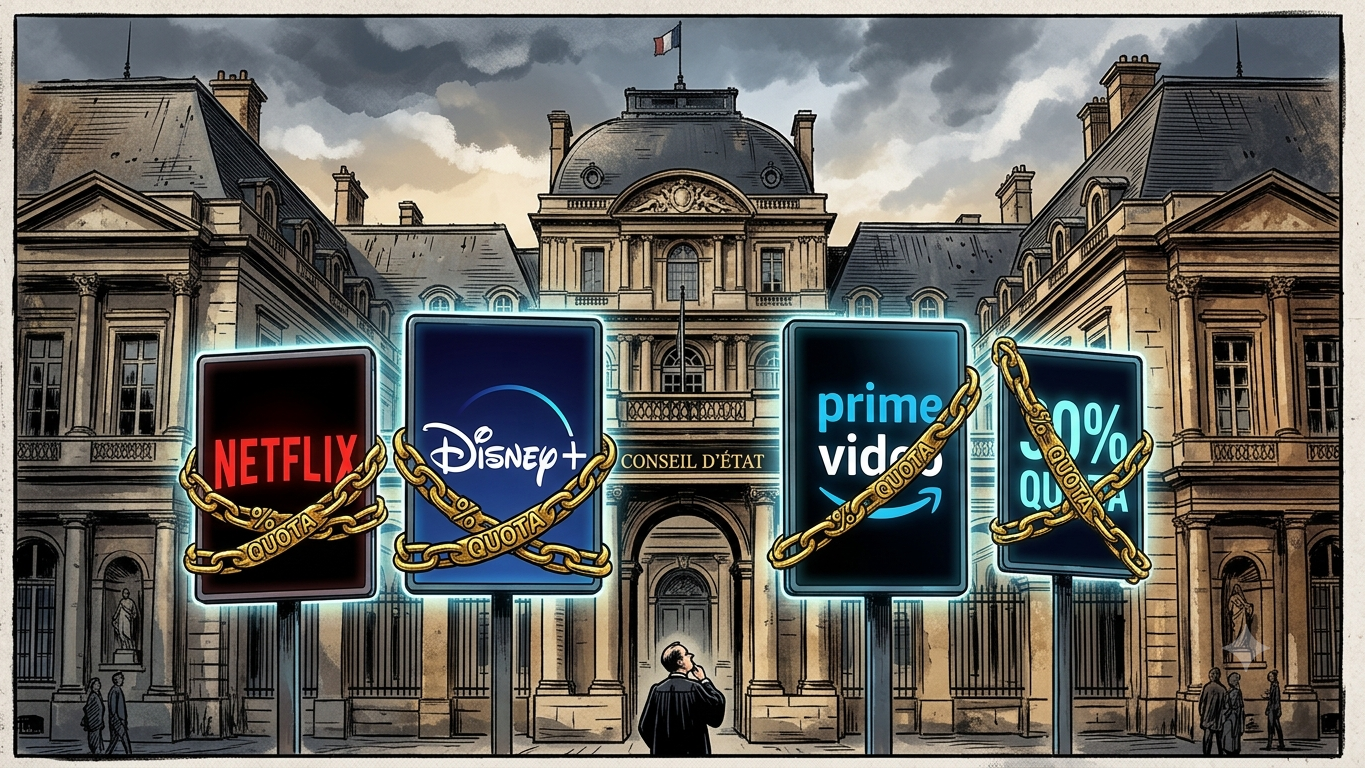
The world’s largest SVoD platforms—Netflix, Disney+, and Prime Video—have joined forces against strict state regulation within Europe’s media market.
The companies have filed a formal appeal with France’s Council of State (Conseil d’État) demanding the review and reversal of a new decree on investment quotas for content genre diversity.
Under the law, which took effect in January 2026, streaming services are required to allocate at least 20% of their total audiovisual content funding obligations to the production of animation, documentaries, and live shows. While French authorities are attempting to promote genre diversity within the national market, the tech giants view the measure as a direct threat to their editorial freedom and business models.
A Blow to Editorial Freedom and Economics
“These new rules abruptly double our investment obligations in strictly defined genres, target streaming services exclusively, and ultimately force the composition of our editorial offering without taking actual audience expectations into account,” said Pauline Dauvin, Vice President of Netflix in France.
In her view, when state regulation overrides creative choice, diversity transforms into a formal “exercise in conformity,” with the viewer ultimately paying the price.
The escalation of the legal conflict was further fueled by a May decision from Arcom, the French media regulator. The agency introduced a sweeping amendment that more than doubled Prime Video’s mandatory annual investment in French content, raising it from €40 million to €90 million. This threshold could climb to €110 million if the platform seeks to shorten the theatrical window and release films on streaming less than 12 months after their big-screen premieres. For comparison, Netflix currently allocates approximately €250 million annually to the production of French series, films, and documentaries.
Industry analysts note that these new financial requirements directly undermine the highly lucrative economic model of streaming services, which currently relies on a balance between rising subscription fees and the active expansion of ad-supported tiers. Price hikes remain justified to the user only as long as they are satisfied with the quality and depth of the content library. If strict quotas cause content satisfaction to drop alongside rising subscription costs, platforms risk facing a mass subscriber churn.
The Heaviest Regulations in the EU
Prime Video also confirmed the filing of the lawsuit with the Council of State. A spokesperson for the platform emphasized that the legal proceedings do not signify a withdrawal of support for the French creative sector. Rather, the goal of the lawsuit is to achieve a balanced, fair, and legally sound regulatory framework.
“Adding new restrictions in a situation where obligations under the SMAD decree are already the heaviest in the entire European Union risks weakening this positive momentum rather than strengthening it,” Prime Video concluded.
Industry experts are closely monitoring the case, as the decision of the French Council of State could set an important precedent for the regulation of global OTT platforms across the entire European landscape.
Source: Advanced Television