



🧾 UK Considers Extending TV License Fee to Streaming Services
The funding system for public service broadcasting in the United Kingdom is on the verge of its most radical overhaul in decades. Culture Secretary Lisa Nandy has publicly signaled her support for expanding the BBC license fee framework.
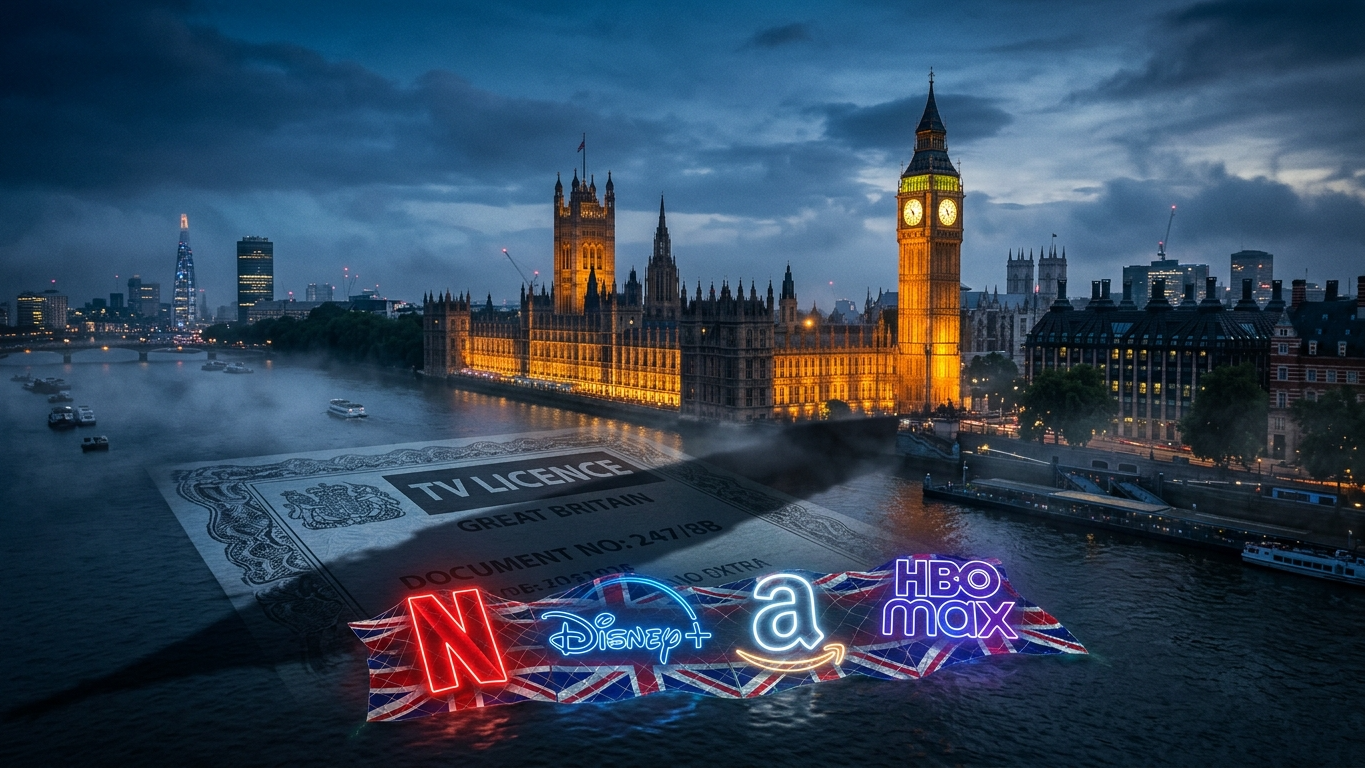
Under the new initiative, the obligation to pay the annual £180 ($240) fee could be extended to users of global streaming platforms, including Netflix, Disney+, and Prime Video.
The proposal comes ahead of upcoming negotiations to renew the broadcaster’s Royal Charter and establish a sustainable new funding model. BBC leadership has long maintained that the current system is obsolete. Presently, the fee applies only to households watching linear television or live-streamed content, with compliance in this segment remaining critically low. At the same time, statistics show that while 94% of the UK population uses BBC services monthly, fewer than 80% actually pay the license fee, resulting in hundreds of millions of pounds in lost revenue each year.
Testifying before the Culture, Media and Sport Committee, Lisa Nandy outlined potential configurations for the new levy for the first time. Specifically, the government is considering an option where users who watch both the BBC and commercial platforms would pay the standard rate, while a reduced rate would be introduced for those who subscribe exclusively to foreign SVoD services. A system of targeted exemptions is also being developed. According to the Culture Secretary, broadening the taxpayer base could ultimately “lower the cost of the license for everyone.”
The central argument put forth by the government and the broadcaster is that American streaming giants benefit immensely from the British media ecosystem—relying on the infrastructure established by the BBC, hiring personnel trained by the corporation, and poaching local talent.
“In this country, everything eventually leads back to the BBC, and the corporation should be louder about that,” Nandy emphasized.
Meanwhile, the government continues to flatly reject the idea of levying a direct tax on the streaming platforms themselves—a practice already implemented in several other European countries to support national cinema. Authorities fear that such a move would deter American investment from UK-based content production.
The initiative has already drawn sharp criticism from the Motion Picture Association (MPA), which represents Hollywood studios and streaming platforms. Streamers have expressed serious concerns that the additional financial burden will ultimately fall on the shoulders of their end consumers.
In parallel, Lisa Nandy addressed the sweeping internal restructuring underway at the BBC. As part of a plan to cut costs by £500 million over the next three years, the corporation is implementing thousands of redundancies. The Culture Secretary called it “somewhat strange” that such drastic budget cuts were approved by interim leadership before the new Director-General, Matt Brittin, officially took office in May 2026. She voiced concern that these cuts could jeopardize a years-long push to decentralize broadcasting and relocate production hubs from London to the regions.
Additionally, the Minister backed criticisms of the BBC for spending excessively on acquiring American content at the expense of supporting local producers—a practice the corporation’s new chief has already pledged to review.
Source: Deadline