



📱 The Logic of Micro-Drama Excludes the Use of AI
The Realist International Vertical Web Series Festival in Ivanovo kicked off its business program with a masterclass titled "The Full Lifecycle of a Micro-Drama: From Script to Screen."
The session was led by Ali Gamloush, a pioneer of the vertical format in the Middle East, former Head of Originals at Shahid, and an International Emmy Awards nominee.
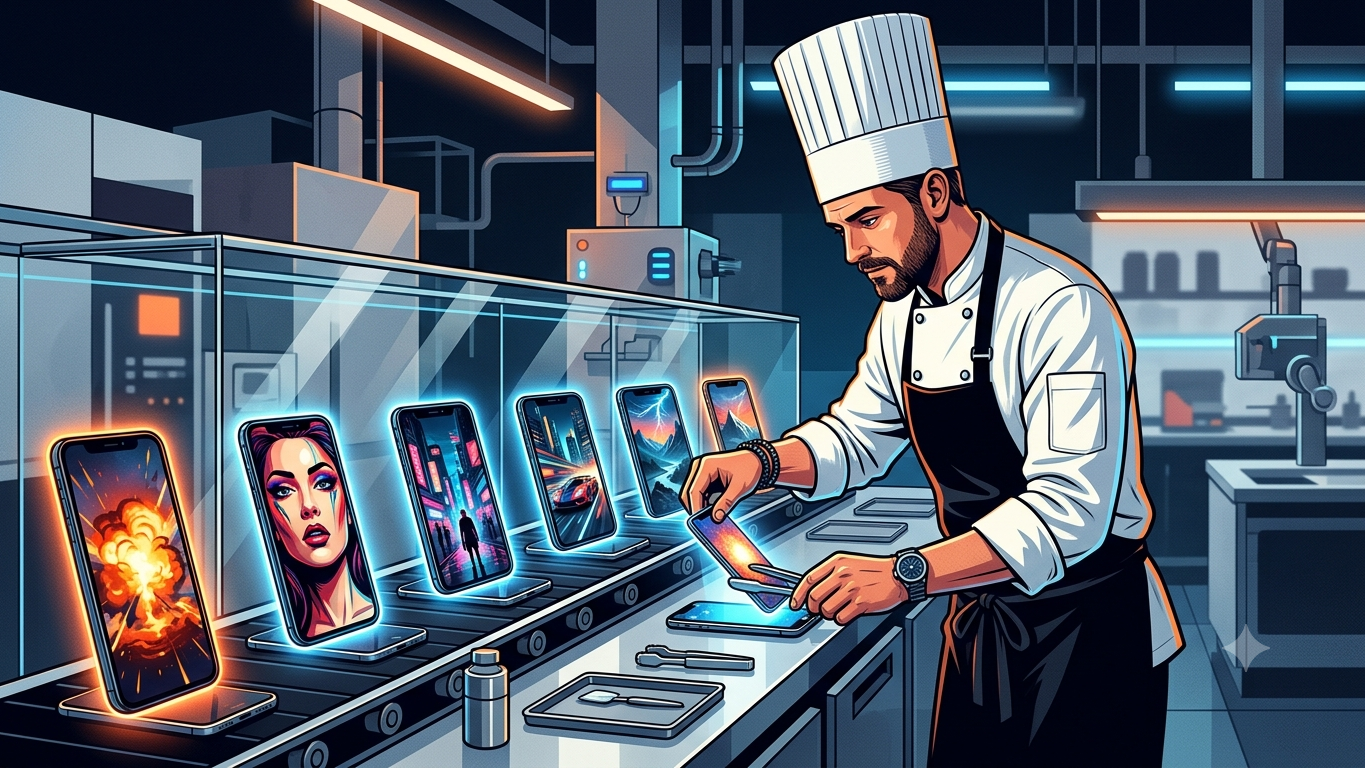
The speaker noted that the traditional film industry still harbors a bias against micro-dramas, forcing feature-film directors to completely relearn how to shoot content. Gamloush compared this shift to a fine-dining chef transitions to making burgers. The biggest misconception, he stated, is viewing a micro-drama as a conventional film chopped into pieces. Instead, it is a unique mobile-consumption format where screen imagery, editing, and frame composition are dictated by the fact that the viewer holds their phone vertically, leans forward, and constantly swipes through videos.
The expert outlined four stages of project creation—development, production, packaging, and distribution—emphasizing that an engineering-like approach to storytelling is valued more highly here than raw creativity. The producer described micro-drama as “the art of breaking a heart and gluing it back together in 60 seconds.”
When developing a script, it is critical to follow three rules: a unified plot structure, globally resonant genres, and the mandatory combination of a hook, a twist, and a cliffhanger in every single episode to maintain user retention. A major plot pivot is required every three episodes, and each episode must deliver exactly one vivid emotion. Furthermore, the very logic of the format excludes the use of AI, as screenwriting labor in this segment is already inexpensive, and production demands maximum cost-efficiency.
The physical production of a micro-drama takes just 5 to 6 days. Since close-ups account for half of the total runtime, it is far more cost-effective for producers to discover fresh talent rather than hire established stars. The defining characteristic of these shoots is that the crew must follow the narrative linearly rather than shooting out of continuity; as a last resort, the screenwriter rewrites the script on set to match the location schedule.
During the packaging phase, sound, music, and color grading are critically important. Turning to distribution and monetization, Gamloush cited chef Claude Legras, noting that quality food for youth can be prepared without Michelin stars. Generating revenue from this “cinematic fast food” is achieved either through direct platform commissions based on specific technical briefs, or by distributing on proprietary platforms via subscriptions, advertising, and pay-per-view access.
Ultimately, the formula for a micro-drama’s success boils down to low cost, compact production, continuous storytelling, and instant dopamine.
Source: Kinometro