



🛰 Outer Space Is Becoming Multipolar
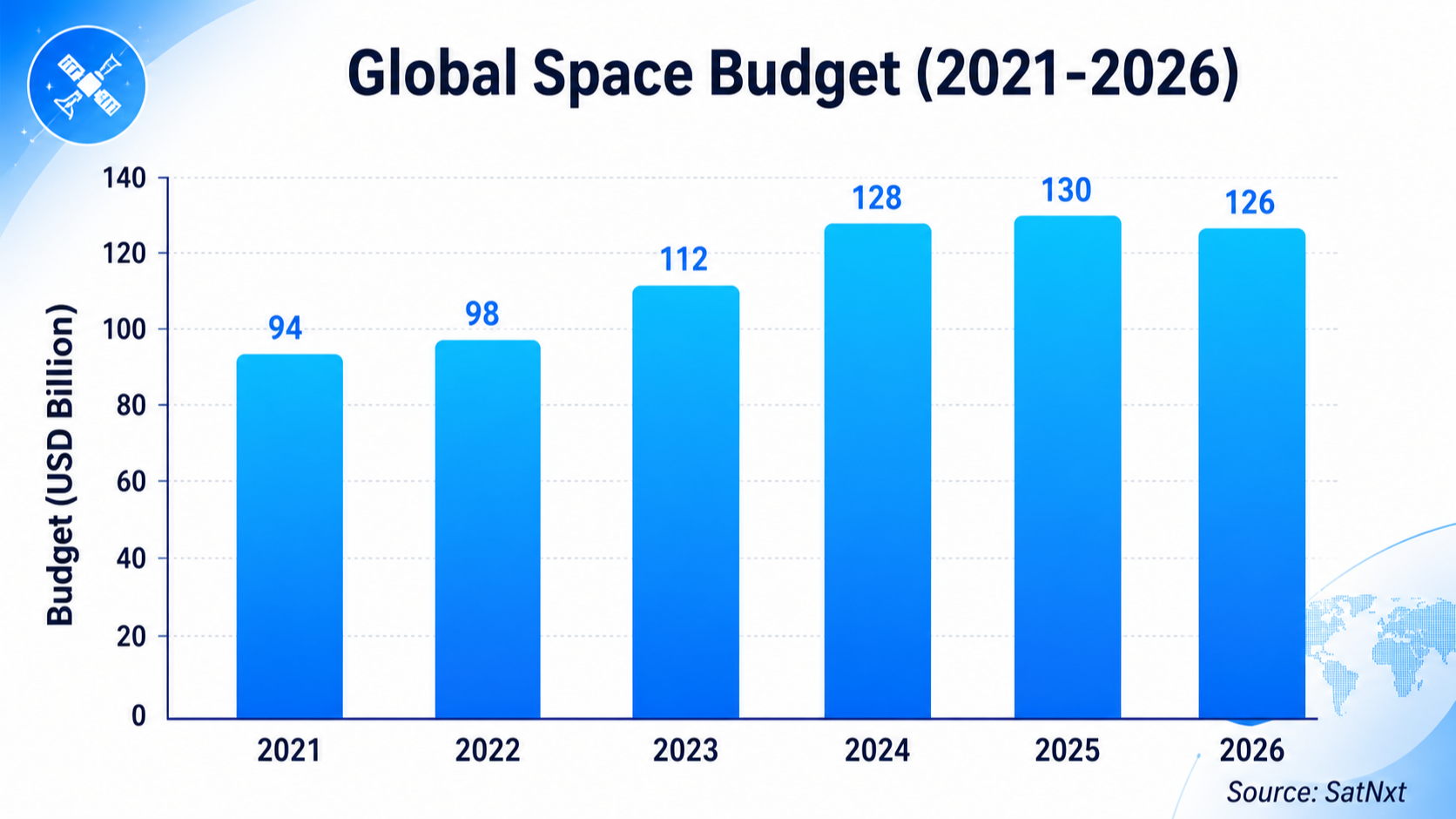
Global government allocations for space programs grew from $94.4 billion in 2021 to $125.9 billion in 2026. Cumulative government spending over the past six years has surpassed $688 billion, according to a research study by the analytical firm SatNxt.
Analysts highlight a fundamental transformation within the global space market. While the world’s three largest national space agencies continue to maintain their dominant positions in terms of funding volume, their combined share of global public expenditure declined from nearly 60% in 2021 to approximately 53% in 2026. This trajectory points toward the emergence of a more distributed and multipolar ecosystem. Nations across the Middle East, East Asia, Eastern Europe, and other regions are actively ramping up investments in sovereign space capabilities.
Geopolitical tensions in recent years have served as the primary catalyst for this trend. Governments worldwide are redirecting budgets toward building independent satellite infrastructure, ensuring national security, monitoring climate, and enhancing the resilience of orbital constellations. At the same time, commercial procurement and public-private partnership (PPP) models have become the principal execution mechanism for both civil and defense initiatives, enabling the accelerated deployment of sovereign technological solutions.
Source: Satellite Markets & Research

In Russia