



In Russia
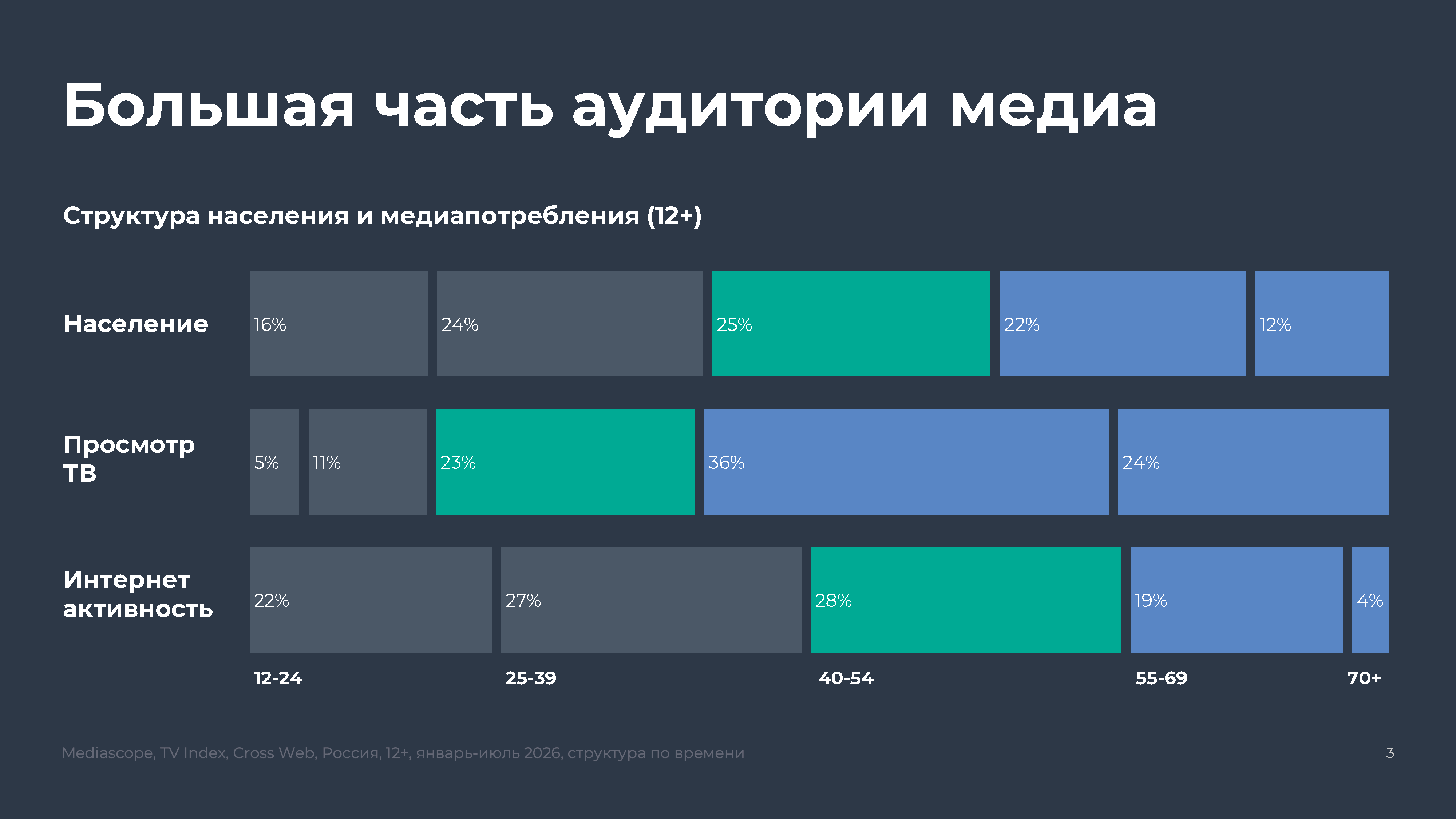
Youth audiences (aged 12–24) have firmly entrenched themselves online, spending an average of 5 hours and 39 minutes on the web daily, compared to just 1 hour and 3 minutes in front of the TV. The internet also dominates the 25–39 age segment, with 5 hours and 1 minute of online activity versus 1 hour and 35 minutes of TV viewing. A tipping point occurs in the 40–54 age bracket (3:01 for TV vs. 4:26 for the internet), while traditional broadcasting regains the upper hand among viewers aged 55–69 (5:17 for TV vs. 3:28 for the internet). The strongest commitment to TV remains in the 70+ demographic, averaging 6 hours and 49 minutes of screen time against 1.5 hours online.
Older generations have emerged as the main driver of internet audience growth over the past four years. From 2022 to 2026, web penetration in the 55–69 age group jumped by 26% (reaching 81%), while in the 70+ category it rose by 22% (reaching 37%). By comparison, penetration among youth has reached saturation levels at 96–97%.
The structure of online leisure remains broadly universal, with social networks and video platforms capturing the lion’s share of attention across all groups. However, platform preferences are distinctly segmented:
On broadcast television, TV series remain a universal anchor (ranging from 23% of viewing time among children to 32% among viewers aged 55–69), alongside entertainment shows. Meanwhile, interest in news and socio-political programming increases with age—rising from 5% and 3%, respectively, among youth to 15% for each genre among audiences aged 70 and older.
Source: Mediascope