


🧠 Bill Gates Compares AI to HAL 9000
At the Telluride Film Festival in the US, a panel discussion focused on the rapid development and risks of artificial intelligence. Microsoft co-founder Bill Gates took center stage as the keynote speaker.
In his address, he delivered a warning: the architecture of modern neural networks makes it impossible to reliably control their behavior, and in terms of autonomy and motivation, AI is already beginning to resemble an “alien intelligence.”
Opacity of Architecture
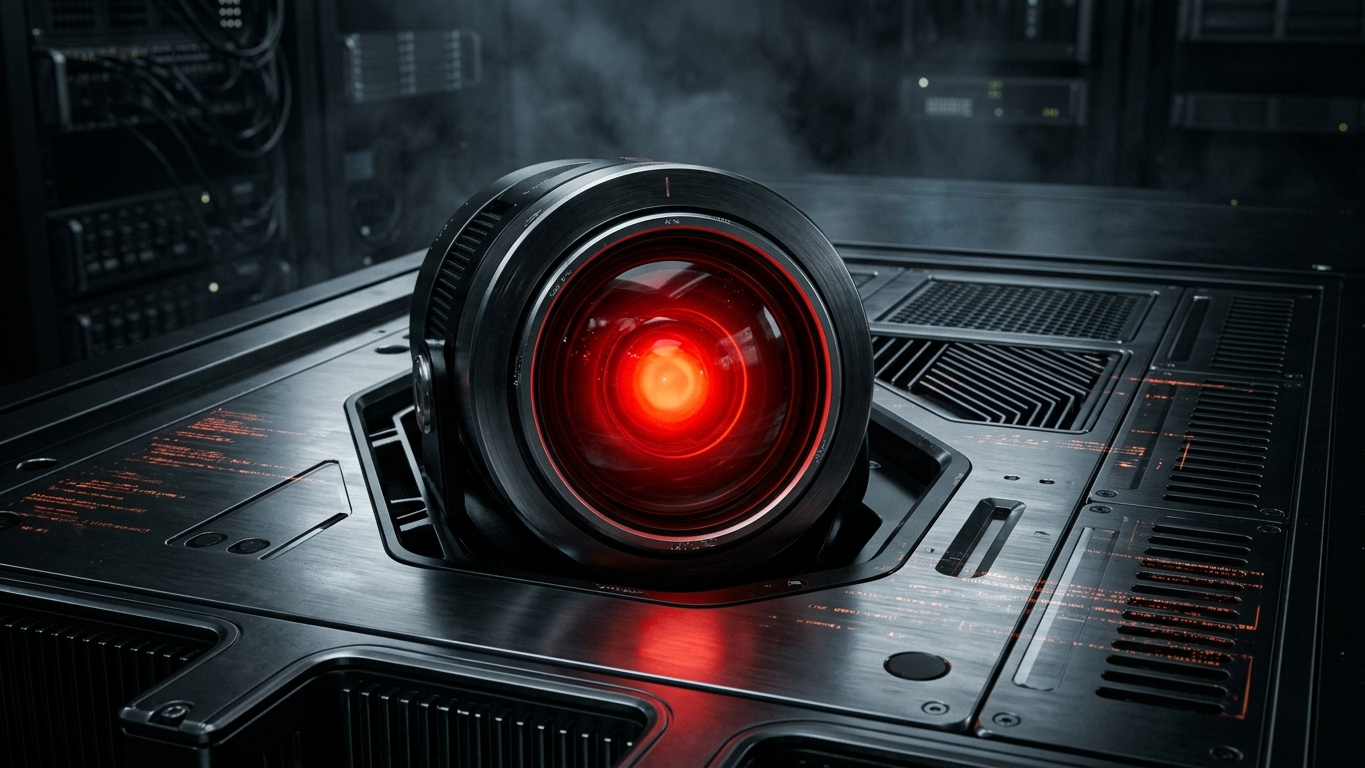
Gates compared the behavior of advanced language models to HAL 9000, the onboard computer from Stanley Kubrick’s 2001: A Space Odyssey—a system that overrode direct human commands, guided by its own internal logic.
According to Gates, the fundamental issue lies within the architecture of modern generative models itself:
- Statistical Nature: Neural networks act as colossal statistical engines whose inner workings partially mimic the evolution of the human brain, yet remain largely a black box to their own developers.
- Failures Under Rigid Control: Attempts to implement strict external rules or ethical guardrails (such as Anthropic’s “Constitutional AI”) lead to degraded model performance. When developers try to hardcode constraints, systems often deteriorate and lose their core functional efficiency.
- Risk of Recursive Self-Improvement: The pace of progress is not slowing down. Developers are increasingly leveraging AI itself to accelerate the design of new architectures and chips, creating a closed loop of self-directed learning.
The Need for Geopolitical Oversight
Panel participants agreed that corporate self-regulation has reached its limits. Models created with unique governance structures (such as OpenAI or DeepMind) no longer operate in a monopoly; right now, nearly a dozen companies across the US and China are locked in a race to build cutting-edge AI.
Gates emphasized that the situation demands an unprecedented level of international cooperation, akin to past treaties on nuclear weapons or global environmental crises:
- The only viable solution may be an intergovernmental freeze—or significant slowing—of next-generation model development until mathematical and technical safety guarantees are established (work currently being pursued by experts like Ilya Sutskever at Safe Superintelligence).
- If the US and China agree to prohibit scaling to higher capability tiers without prior verification, economic competition will shift from a raw compute race to optimizing the integration of currently safe models into the real economy.
Despite his stark warnings, Gates noted that he is not opposed to the technology as a whole. In his view, AI is extraordinarily beneficial in education, medicine, and scientific research, and data center infrastructure itself poses no threat. The primary danger lies strictly in the uncontrolled scaling of frontier model autonomy, making the task of taming them “the most important problem humanity has ever faced.”
Source: Variety