


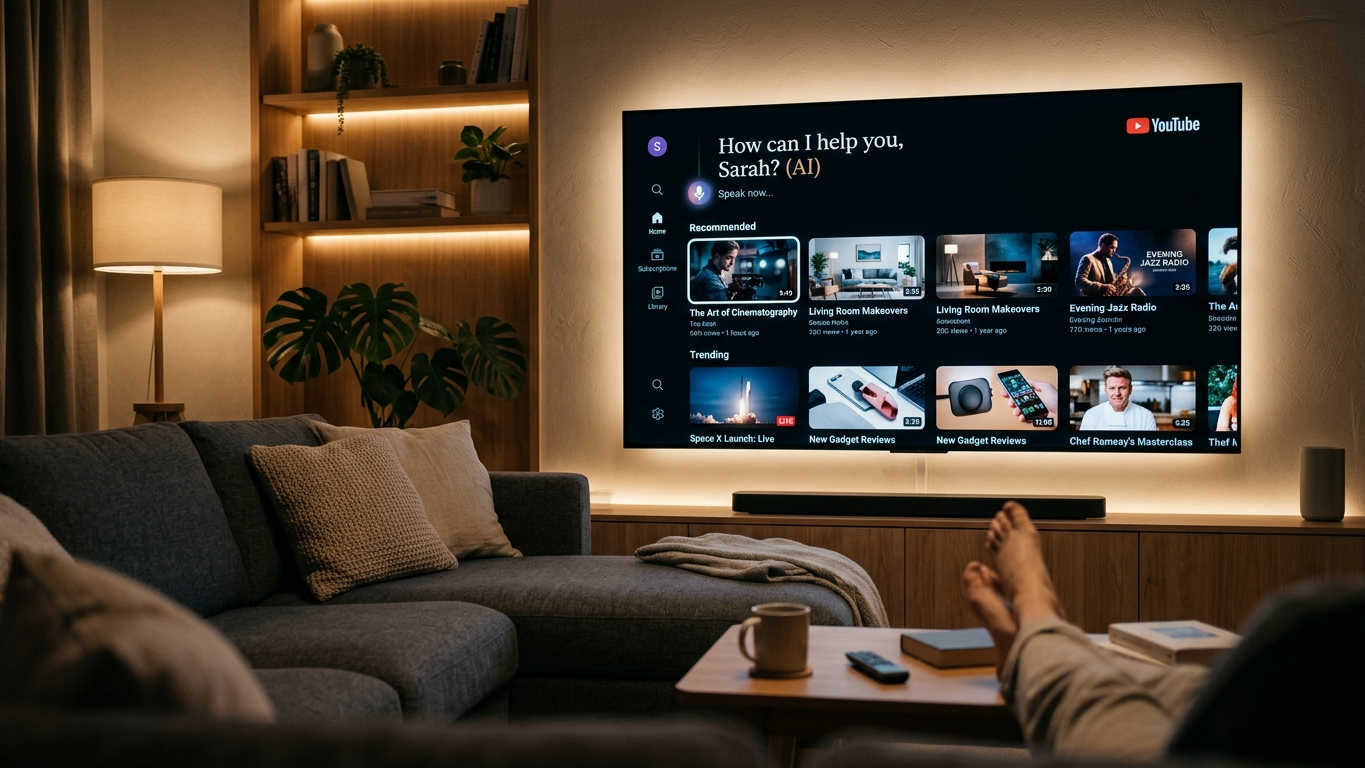

▶️ YouTube Conquers the Living Room Screen
The main screen in the living room is no longer the domain of traditional broadcasting—today, it serves as YouTube’s primary battlefield and chief growth driver.
This was a key takeaway from the IBC 2026 conference, where Marc Heufelder, YouTube’s Head of Product Partnerships for the DACH region (Germany, Austria, and Switzerland), delivered a keynote address. According to Heufelder, traditional broadcasters, telecom operators, and media platforms must abandon direct rivalries and pivot toward native integration if they hope to retain their audiences.
YouTube’s global audience currently exceeds 2.7 billion monthly active users, with daily watch time on TV screens surpassing 1 billion hours. Viewing habits are shifting accordingly: the television has evolved from a passive signal receiver into an interactive, multi-format hub. In 2025, users consumed over 700 million hours of podcasts on TV screens, while co-viewing rates rose to 26%, outstripping traditional television in several key EMEA markets.
For operators, the primary vulnerability lies in the input switch button on the remote: once they lose control of the content showcase and navigation, they lose engagement and customer connectivity. As a solution, YouTube offers operators native integration via dynamic content feeds embedded directly into the provider’s native user interface.
Furthermore, the OTT giant is aggressively enhancing its feature set for TV:
- Multiview: Enables custom split-screen layouts for multiple live streams—ideal for tracking several sports matches or alternative camera angles in Formula 1 simultaneously.
- Interactive AI: A conversational assistant powered by Google Gemini, currently in testing, allows viewers to ask plot-related questions via voice commands on their remotes.
Forward-thinking European players, including Sky and French operator Bouygues, have already begun incorporating YouTube’s native services into their ecosystems, turning potential competition into a commercial symbiosis.
Source: IBC