


📺 Linear TV Is Looking for a "New Antenna"
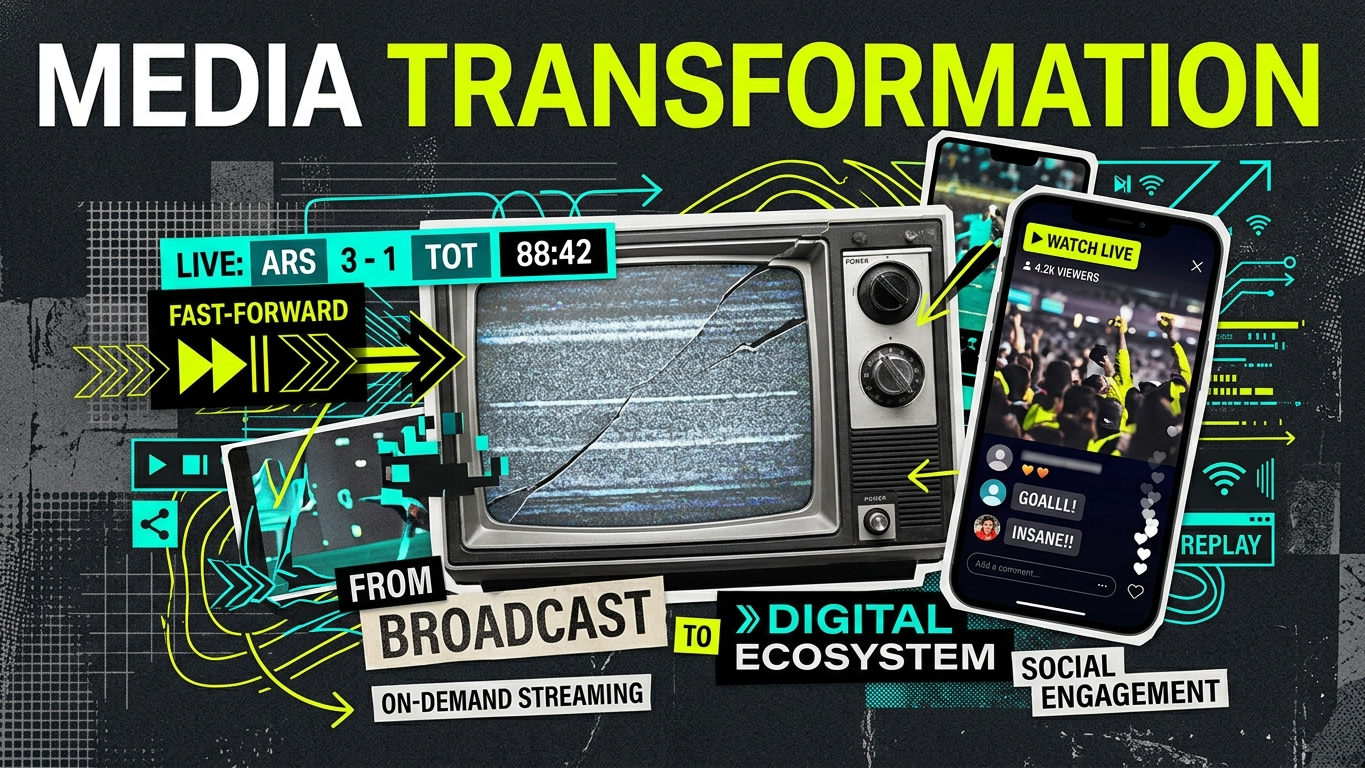
Talk of the impending "death" of traditional television has long been a routine refrain. However, statistics reveal that this sentence is both right and wrong at the same time. In Russia, linear broadcasting isn't plunging off a cliff—it is transforming.
Analysts highlight a telltale fact: TV viewing volume in the country has stopped declining. According to Mediascope, the multi-year downward trend in screen time has paused, while viewing among children aged 4 to 17 even grew by 7%. Monthly reach remains virtually total at nearly 97% of the population. But holding these volumes comes at the cost of an aging audience: FOM data shows that in the spring of 2026, 40% of Russians tuned into TV daily, whereas 29% did not watch it at all. Youth under 24 have decisively migrated to social media and video platforms for news and content.
Linear broadcasting has completely yielded library content (movies and TV series) to streaming services, losing out to platforms like VK Video (61% reach) and Rutube (49%) in the user-generated and short-form video segments. Yet, TV retains a stronghold where digital services cannot yet compete—live coverage of key events.
A striking example: broadcasts of the Summer 2026 FIFA World Cup delivered Match TV an all-time record since measurements began—the final garnered a 48.7% share (peaking above 65%), while total tournament reach reached nearly 51 million people. This monopoly on “right now” keeps both viewers and advertisers anchored to TV.
The core industry transition is not the “demise” of linear TV, but a shift in its delivery channel. Almost 40% of internet users already watch scheduled TV content online. Broadcasters are actively capturing this niche: Gazprom-Media is unifying Rutube, Yappy, and Premier into a single ecosystem under the Rutube brand, FAST channels are rolling out, and Wink is consolidating assets by acquiring Smotreshka.
Furthermore, Russian TV boasts a unique foundation—two digital multiplexes that account for roughly 75% of television viewing via free over-the-air broadcasts. Unlike in the US, where expensive cable was displaced by streaming services, the habit of a ready-made, free stream is hardwired into the infrastructure in Russia.
The principal challenge facing linear TV today is a race against time: whether the format can solidify its presence in the digital environment and capture the attention of younger audiences before its current core demographic fades away.
Source: Telesputnik