



World news
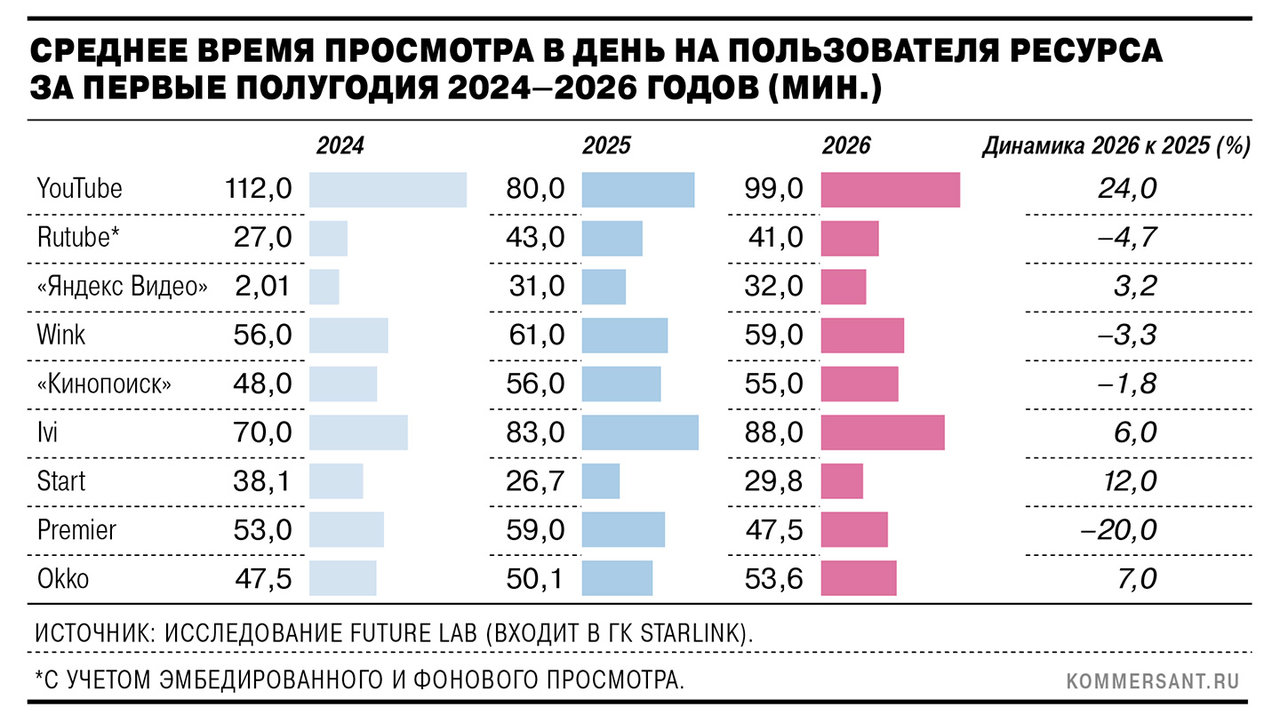
However, this growth was driven entirely by YouTube: excluding the platform, daily watch time on domestic services fell by 5%.
YouTube increased its daily watch time by 24% year-over-year—reaching 99 minutes per user—and fully recovered from the 28.6% drop recorded in the same period last year. By comparison, 2025 saw the exact opposite trend: local platforms surged by 32% as the foreign service lost ground amid bandwidth throttling.
Experts attribute this trend reversal to high-base effects wearing off. In 2024–2025, domestic platforms grew as users migrated to test new alternatives. By 2026, the market had reached saturation: the novelty wore off, and audiences drifted back to the platform offering the most robust recommendation algorithm and the deepest content catalog.
Performance among domestic Russian services remains mixed:
Flawed recommendation algorithms and creator retention remain the biggest challenges for domestic platforms. Without top-tier content creators, initial user trials fail to translate into long-term viewing habits.
Source: Kommersant