

💽 Smart TV Operating Systems Are Evolving into Standalone Media Platforms
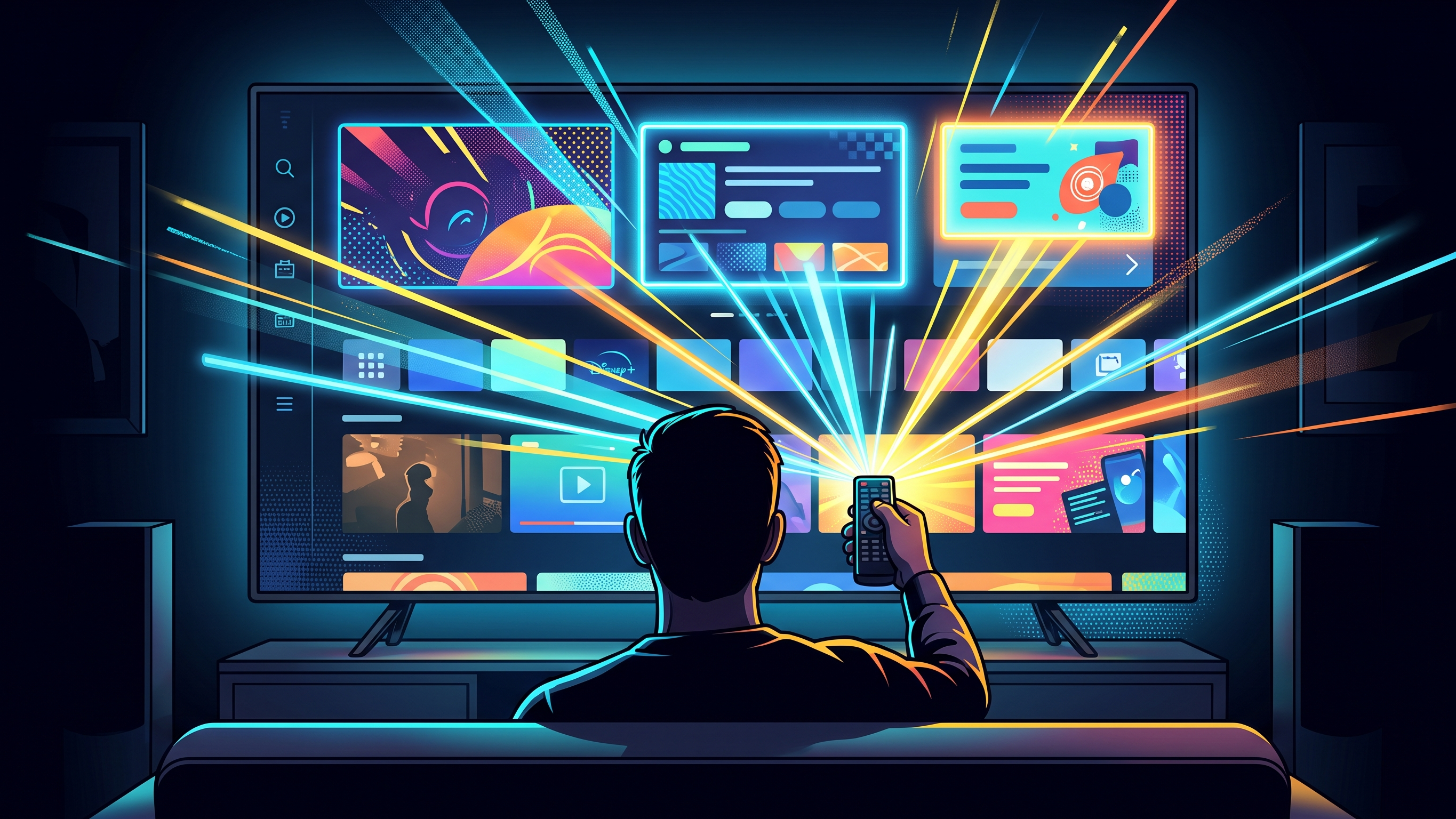
Smart TV operating systems are expanding beyond simple control interfaces to become full-fledged advertising channels. Platform owners can now reach audiences before users even launch a specific app or select a streaming service, capturing viewer attention from the very start.
According to research by Rakuten TV Enterprise, 35.6% of advertisers identify the Smart TV home screen as their preferred format for boosting brand visibility. In the United States, such initial screen integrations reach up to 95% of connected TVs. Russia is seeing rapid growth in this segment as well: experts estimate that native interface ads account for roughly 16% of the domestic Connected TV (CTV) market, representing around 2.5 to 3 billion rubles.
Operating system developers—such as Google TV, LG webOS, and Roku—are actively monetizing home screens through recommended content carousels, clickable banners, and interactive icons featuring QR codes. Furthermore, platforms are pushing their own revenue-sharing models, claiming up to 30% of third-party advertising inventory in exchange for ecosystem placement.
Despite the high impact of this initial point of contact, industry experts point to several obstacles: a lack of robust independent verification, the absence of unified industry measurement standards, and the risk of “walled gardens,” where platform owners prioritize their own proprietary content.
Source: Sostav