



⚖️ Italy Reforms Its Film Industry
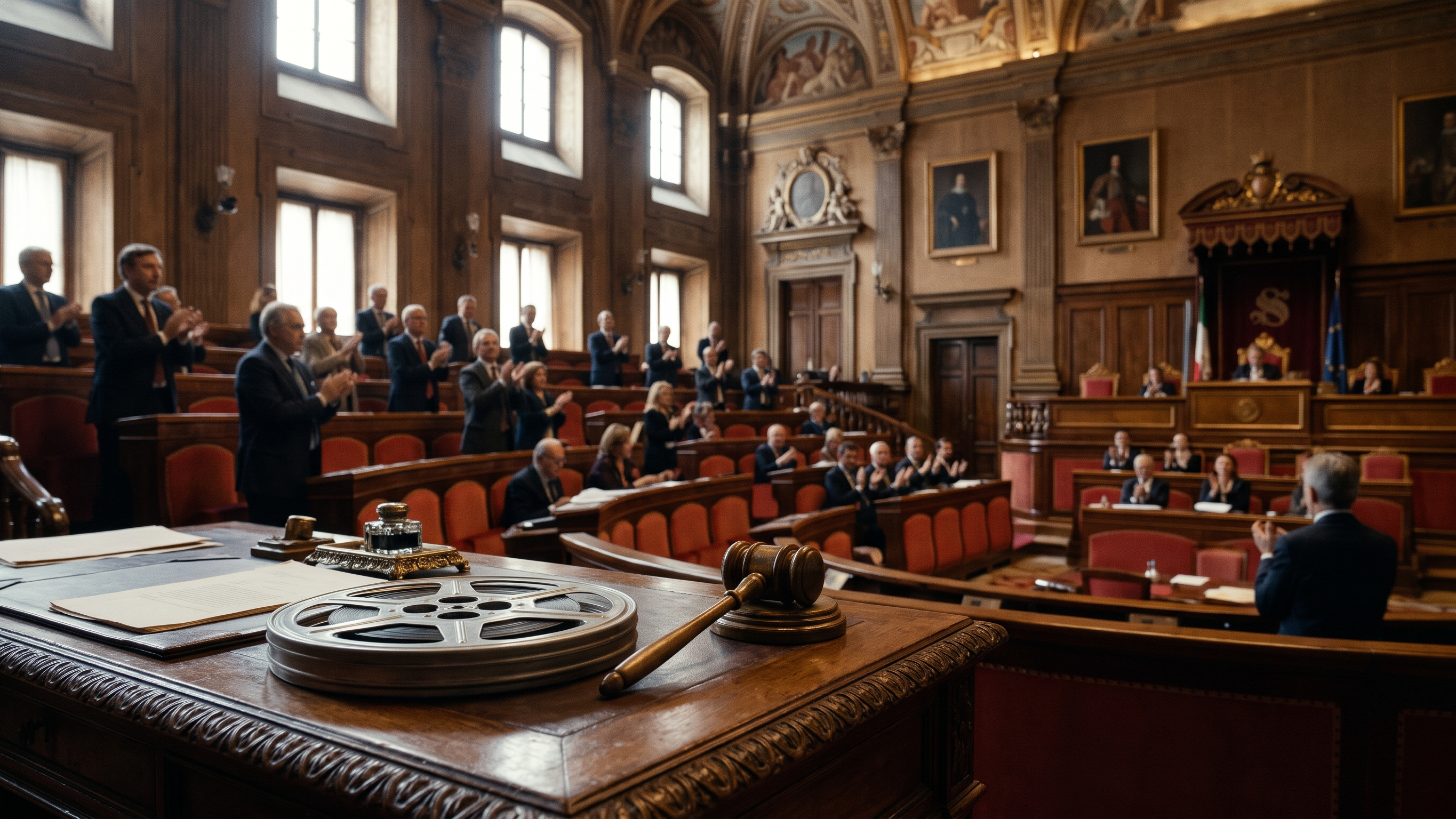
The Italian Senate has approved a landmark reform of the legislation governing cinema and the audiovisual sector. The document represents a rare instance of full cross-party consensus in modern Italian politics.
The primary organizational change will be the dismantling of the Ministry of Culture’s (Mic) old bureaucratic model and the creation of a new governance architecture for the industry:
- The Experts’ Forum – A new advisory and monitoring body for formulating public policy, which will completely replace the Supreme Council for Cinema and Audiovisual Arts (Consiglio Superiore del Cinema e dell’Audiovisivo).
- The National Film Agency – An autonomous entity with its own managerial, financial, and asset balance sheet. The Agency will take over all operational and executive functions, as well as the distribution of subsidies, from the Ministry of Culture, leaving the ministry solely with strategic oversight and policy planning.
The adopted legislation empowers the Italian government to conduct a deep overhaul of the market regulation and subsidy framework. Under a three-year plan, the authorities are set to:
- Overhaul the public funding system: Balance automatic grants, selective subsidies, tax credits, and non-repayable grants;
- Support the independent sector: Introduce preferential terms for independent producers, debut and second feature films, young creators, and small-scale audiovisual projects;
- Streamline bureaucracy: Shorten payout timelines and tighten transparency regarding the targeted use of public funds;
- Introduce cutting-edge regulation: For the first time, the law mandates rules governing the use of artificial intelligence in film production, strengthens anti-piracy measures, and launches a national plan for the restoration and modernization of brick-and-mortar cinemas;
- Expand social safeguards: The reform addresses the labor rights of industry workers, providing for a revision of intermittent employment benefits (indennità di discontinuità) and social safety nets.
Italian Minister of Culture Alessandro Giuli called the outcome “historic for Italian culture,” emphasizing the emergence of a “new style” in relations between state institutions and the film community—one built on trust and mutual responsibility.
However, professional guilds of directors, screenwriters, and creators expressed reserve and skepticism. Representatives of the joint Guild Coordinating Council stated they were surprised by the withdrawal of amendments for the sake of expediting the law’s passage, expressing concern that a systemic document is being built “from fragmented ideas, while solutions to key problems are pushed down the line.” In response, Undersecretary of Culture Lucia Borgonzoni assured that the necessary legislative decrees and implementing regulations will be enacted as swiftly as possible to prevent any industry downtime.
Source: ANSA