



World news
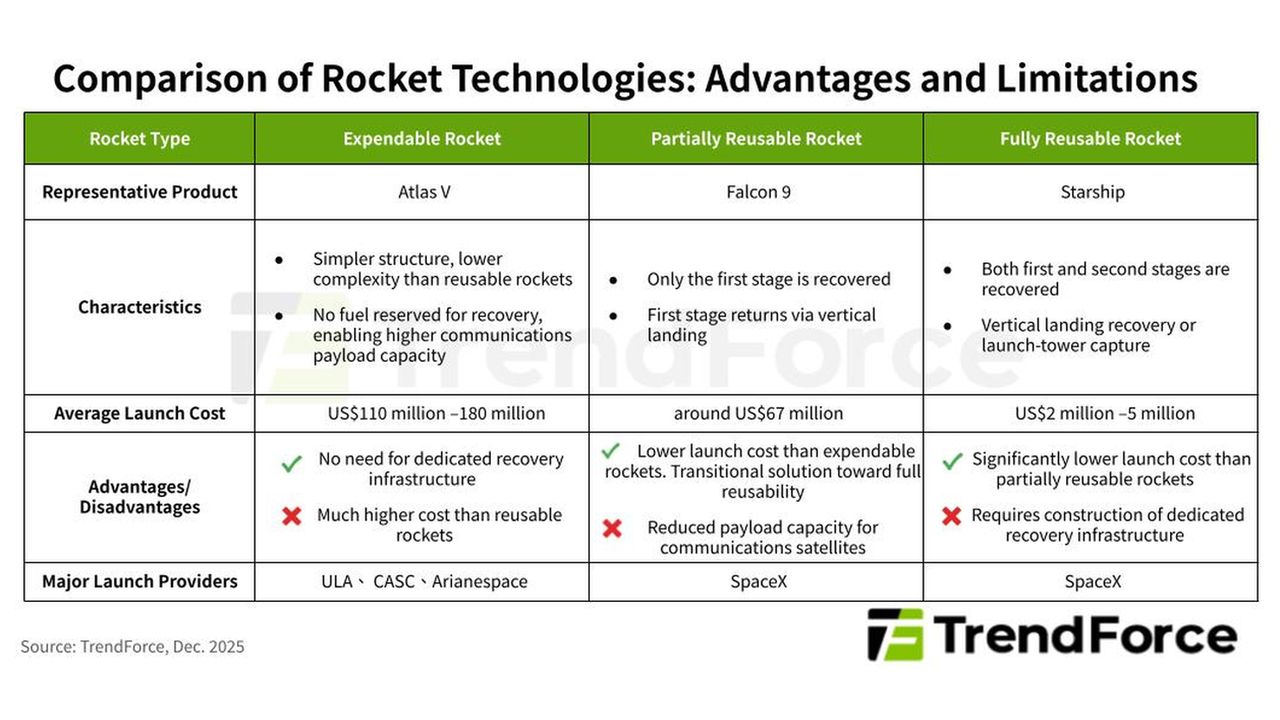
Launch economics in numbers:
🔹 Expendable rockets: $110–180 million per launch;
🔹 Partially reusable rockets (such as Falcon 9): around $67 million;
🔹 Fully reusable systems (the target): $2–5 million.
A key trend is the shift to liquid methane (as used in Starship). Unlike kerosene, methane leaves almost no carbon residue, allowing engines to be reused without costly cleaning and refurbishment.
While SpaceX currently leads the race, companies in China (the G60 program), Europe (Arianespace), and Japan are actively investing in vertical-landing technologies. The main challenges now are building ground infrastructure capable of handling giant booster stages and maintaining payload capacity while carrying enough fuel for landing.