



🧠 How Broadcasters Can Implement AI Without Losing Viewers' Trust
The rapid evolution of artificial intelligence in the media industry comes with a constant search for balance between automation and risk.
The rapid evolution of artificial intelligence in the media industry comes with a constant search for balance between automation and risk.

The international film and television market World Content Market – Almaty 2026, held on September 29–30 at the Novotel Almaty City Center, has wrapped up in Almaty.

Marvel Studios’ blockbuster Avengers: Endgame has reclaimed its title as the highest-grossing film in cinematic history. The film’s global total has reached $2.9255 billion, once again surpassing James Cameron’s Avatar ($2.9237 billion).

In the first half of 2026, the domestic advertising market maintained positive momentum, though its growth rate slowed significantly.

The media industry is undergoing its largest transformation of the decade as the merger between Paramount and Warner Bros. Discovery officially closes. The newly formed entity, named Skydance Corp., will be led by 43-year-old David Ellison, son of Oracle founder Larry Ellison.
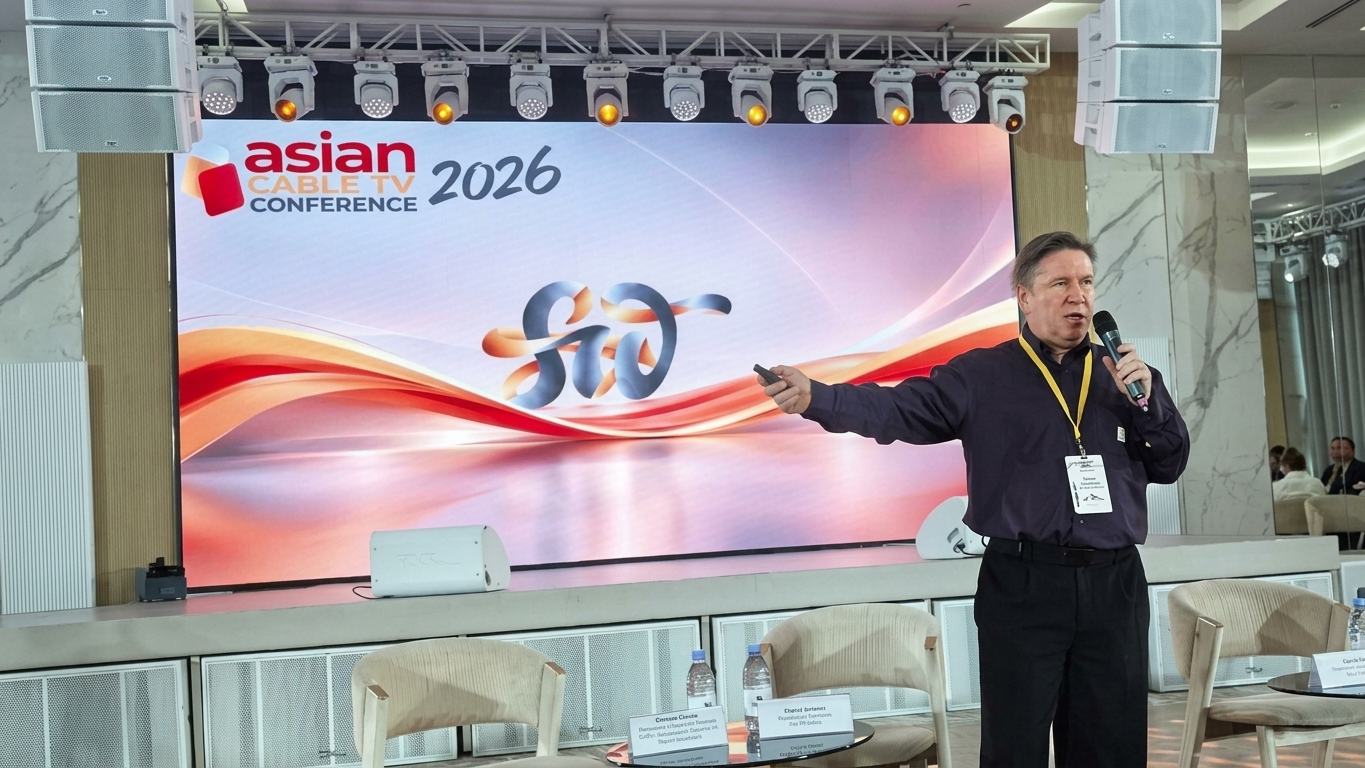
At the 16th Asian Cable TV 2026 International Conference in Almaty, Grigory Kuzin, Director of Media Platforms at MSK-IX, discussed the transformation of traditional television, the outlook for the FAST channel market, and how the Mediabaza ecosystem helps broadcasters and online platforms build end-to-end internet broadcasting workflows.

Amazon MGM Studios has reinforced its position as a powerhouse in content for female audiences, as its adaptation of Colleen Hoover’s thriller Verity—starring Anne Hathaway, Dakota Johnson, and Josh Hartnett—opened to $62.5 million globally.

The short film Maut by Yakut director Dmitry Davydov will be screened at the 42nd Interfilm International Short Film Festival Berlin, taking place from November 10 to 15, 2026.

The rapid evolution of artificial intelligence has made it an integral part of the visual effects (VFX) and animation industries.

Between July 2025 and July 2026, the number of telecom operators in Russia fell by 17%, dropping to just over 7,000 companies. The volume of issued licenses saw a proportional decline, shrinking to 21,000.