


World news
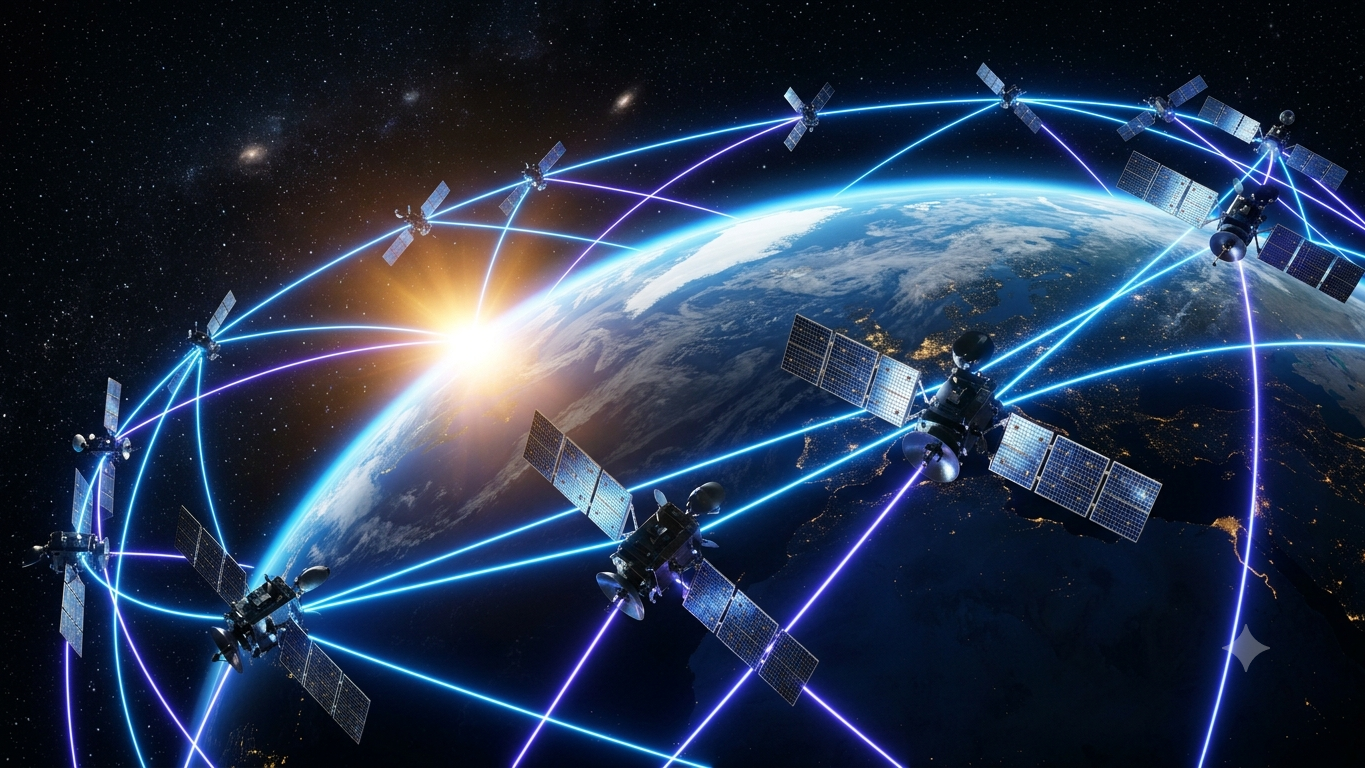
Positioned between Low Earth Orbit (LEO) and Geostationary Orbit (GEO), it offers an ideal commercial balance: latency is significantly lower than in geostationary orbit, while the coverage footprint of each spacecraft is several times wider than that of low-orbit satellites.
Although MEO systems are currently less prevalent than LEO constellations, leading global operators and governments are making long-term bets on them. Virtually all prospective medium-orbit projects are being designed as core elements of larger, multi-orbit architectures, serving as space-based backbones for transmitting colossal volumes of data.
To date, the only commercially successful operational MEO communications system is O3b mPOWER, owned by the Luxembourg-based satellite operator SES. The first generation of the system entered service back in 2013. Currently, SES is deploying its second generation of software-defined Ka-band spacecraft in circular equatorial orbits at an altitude of approximately 8,000 km.
Each Boeing-built satellite is capable of generating up to 5,000 steerable beams, delivering data throughput rates ranging from 50 Mbps to 10 Gbps. Out of 13 planned spacecraft, 10 are already in orbit, with the remaining three scheduled to join the constellation in the second half of 2026.
The development of the MEO segment over the coming years will be defined by several ambitious international initiatives:
The market also features compelling adjacent orbital concepts, such as Germany’s Rivada network (the Outernet project). Although its 1,050-kilometer polar orbit technically falls under the LEO classification, its unique closed architecture—which bypasses terrestrial gateways by routing data exclusively via space-based laser inter-satellite links—makes it a direct competitor to MEO heavyweights like SES.
While operators currently prefer not to disclose granular financial metrics for the MEO segment, the sustained capital expenditure directed toward next-generation satellites and optical technologies demonstrates that medium Earth orbit has successfully secured its unique niche in the global space infrastructure.
Source: Satcomrus